

Should Sophomores Start SAT or ACT Prep This Year?

Included in this article: 

  • Brain Development & Academic Readiness
  • Early Prep: What It Actually Means
  • Pros of Starting SAT Prep in Sophomore Year
  • Cons of Starting SAT Prep Too Early
  • Ideal SAT Timeline by Student Type
  • When to Start SAT: A Clear Framework
  • Common Mistakes to Avoid


Sophomore year often brings a new question into family conversations: should SAT prep start now? With growing competition and early planning trends, many students feel pressure to begin as soon as possible. Parents worry about falling behind, while students wonder whether waiting might limit their options.

The truth is that earlier does not automatically mean better. Starting SAT prep sophomore year can help some students, but for others, it may create unnecessary stress too soon. The right timeline depends on academic readiness, coursework progression, and long-term goals. Before deciding when to start SAT preparation, we need to understand what actually determines readiness.


Brain Development & Academic Readiness

The decision about SAT prep sophomore year should begin with one central question: is the student developmentally and academically ready? Readiness is not determined by ambition alone. It reflects cognitive growth, coursework completion, and emotional stability.

Cognitive Maturity in Sophomore Year

Sophomore year sits at an interesting developmental stage. Executive function, the brain’s ability to plan, organize, and manage time, continues strengthening throughout adolescence. Some sophomores already demonstrate strong self-regulation. They can manage long study blocks, analyze complex passages, and review mistakes independently. These students may respond well to light, structured SAT exposure.

Working memory and sustained focus also vary widely. The SAT requires students to hold multiple pieces of information in mind while solving problems under time constraints. A student who can maintain 60–90 minutes of focused attention is more likely to benefit from formal prep.

Analytical reasoning continues developing during these years. Students exposed to rigorous reading and multi-step math problem-solving often adapt faster to SAT-style questions. However, others are still building foundational reasoning skills. Starting too early, before these skills stabilize, may produce frustration rather than improvement.

Processing speed differences also matter. Some students read and compute quickly by sophomore year, others develop this efficiency later. For students still building speed, waiting until junior year can lead to more natural gains.

This explains why some sophomores are ready while others benefit from waiting. Development is not uniform, and preparation should align with maturity rather than peer comparison.

Coursework Alignment

Academic content plays a direct role in SAT readiness. Algebra II is particularly important because many SAT math concepts rely on it. Students who have not yet completed or at least begun Algebra II may encounter content gaps during formal preparation.

Advanced reading exposure also shapes readiness. Students regularly engaging with complex nonfiction texts such as historical documents, scientific articles, or analytical essays often transition more smoothly into SAT reading practice.

Writing maturity influences grammar and rhetorical sections. Students still mastering sentence structure and argument development may gain more by strengthening classroom skills first.

Curriculum completion matters because the SAT assesses cumulative knowledge. When students prepare before foundational coursework is complete, they spend time learning material that school will soon reinforce naturally.

Emotional Readiness

Academic ability alone does not determine success. Emotional readiness shapes how students experience test preparation.

Younger students sometimes internalize test results more intensely. A low diagnostic score in sophomore year may discourage rather than motivate. Additionally, maintaining motivation for a test that may not be taken for another year requires sustained discipline.

Burnout risk increases when preparation stretches across too many months. If students begin intensive prep too early, they may lose momentum by junior-year testing windows.


Early Prep: What It Actually Means

One of the biggest misconceptions surrounding SAT prep sophomore year is that “starting early” automatically means weekly tutoring sessions, full-length practice tests, and months of intensive drilling. In reality, early preparation can take different forms. The level of intensity should match both readiness and timeline.

Starting early does not require turning sophomore year into a test-prep year. Instead, preparation can unfold in phases.

  1. Familiarity Phase (Light Exposure)

The familiarity phase focuses on awareness, not performance. Students may take one diagnostic test to understand format and baseline score. They review question types, timing structure, and scoring patterns. Exposure might include occasional practice passages or math sets once or twice per month.

Time commitment: Approximately 1–2 hours per week, sometimes less.

The goal during this stage is comfort. Students reduce uncertainty and understand what the SAT measures. There is no pressure to raise scores dramatically. For many sophomores, this light introduction builds confidence without creating stress.

  1. Skill-Building Phase

The skill-building phase strengthens underlying academic foundations rather than chasing test strategies. Students focus on reading complex nonfiction regularly, improving grammar fundamentals, reviewing algebra concepts, and practicing multi-step reasoning.

Time commitment: Approximately 2–3 hours per week, often integrated into regular academic study.

This stage works well for students who are still completing key coursework, such as Algebra II. Instead of intensive test prep, they develop durable skills that naturally raise performance later. Progress during this phase feels steady rather than urgent.

  1. Full Prep Phase

The full prep phase typically begins closer to the intended test date, often during junior year. Students complete structured practice sets, timed sections, and full-length exams. They analyze mistakes carefully and refine pacing strategies.

Time commitment: Approximately 4–6 hours per week during active preparation periods.

This is the most intensive stage, and it works best when cognitive maturity, coursework completion, and motivation align. Beginning this phase too early can lead to fatigue before the official test window.

Understanding these distinctions reframes the question of when to start SAT preparation. Early exposure does not require early intensity. Families can choose the phase that fits the student’s readiness rather than defaulting to full-scale prep prematurely.


Pros of Starting SAT Prep in Sophomore Year

Starting SAT prep sophomore year can offer meaningful advantages when approached strategically. The benefits do not come from starting early for its own sake. They come from how time is used.

A lower-pressure environment is one of the strongest advantages. Junior year often carries heavier coursework, AP or IB exams, leadership roles, and college planning conversations. Sophomore year typically allows more flexibility. When students explore SAT format and expectations without immediate testing deadlines, they engage more calmly. Reduced pressure often leads to better learning retention and healthier confidence.

More time also allows for gradual skill-building. Instead of cramming strategies into a few intense months, students can strengthen reading comprehension, grammar precision, and algebra fluency steadily. Spaced practice improves long-term memory and reduces cognitive overload. Skills develop more naturally when reinforcement occurs over months rather than weeks.

Early preparation also creates room to identify and repair weak foundations. A sophomore diagnostic may reveal gaps in algebra concepts or difficulty with evidence-based reading. Addressing those gaps early allows classroom instruction to reinforce them before junior-year testing windows approach. Students improve core skills instead of relying solely on short-term test tactics.

Finally, better spacing before junior-year testing reduces scheduling compression. Students who begin light preparation in sophomore year can shift into full prep more smoothly. They avoid stacking SAT study on top of peak academic seasons. When preparation unfolds in phases rather than bursts, students maintain consistency without burnout.


Cons of Starting SAT Prep Too Early

Starting too early can create problems that are harder to detect than procrastination.

If a sophomore begins intensive prep but does not test until late junior year, gains may level off. Without new academic input, such as advanced math or higher-level reading, scores can drop. The motivation curve often declines when students feel they are “studying but not improving.”

Burnout before the peak testing window is another concern. Sustained prep over 12–18 months can drain focus. By the time junior spring arrives when performance matters most, energy and enthusiasm may be depleted.

There is also the issue of wasted prep before content completion. Students who have not finished Algebra II or developed mature analytical reading skills may practice strategies on material they are not developmentally ready to master. This creates frustration rather than progress.

Overexposure can increase anxiety. When students repeatedly revisit the same test format over long periods, the exam can feel overwhelming rather than manageable. The overexposure effect reduces psychological sharpness.


Ideal SAT Timeline by Student Type

There is no universal “correct” starting point. The right timeline depends on academic track, cognitive readiness, and long-term goals. Below are practical, scenario-based examples families can use as reference points.

  1. High-Achieving Student on an Accelerated Math Track

Consider a sophomore who completed Algebra II early and is enrolled in Precalculus or higher. This student may benefit from light exposure during sophomore year, but not full-scale prep.

A practical approach looks like this:

  • Spring of sophomore year: Take a low-pressure diagnostic test to establish a baseline.
  • Summer before junior year: Begin structured but moderate prep focused on refining weak areas.
  • Fall of junior year: Transition into a targeted plan with timed practice and test strategy.

Because the academic foundation is already strong, early familiarity builds confidence without risking burnout. The key is exposure, not saturation.


  1. Average Student Completing Algebra II in Junior Year

Now consider a student who will not finish Algebra II until junior year. Starting intensive SAT prep as a sophomore may feel productive but often leads to frustration.

A smarter approach:

  • Sophomore year: Focus on mastering current coursework especially algebra fundamentals and analytical reading.
  • Early junior year: Take a diagnostic after completing core math concepts.
  • Late junior year: Begin concentrated SAT prep when the curriculum aligns with tested material.

For this student, strengthening foundations produces greater score gains than premature strategy drills.


  1. IB / AP-Heavy Students

Students in rigorous programs like AP or IB often face heavy junior-year workloads. For them, timing is less about ability and more about sustainability.

A realistic plan:

  • End of sophomore year: Brief familiarity phase (format awareness, one practice test).
  • Summer before junior year: Structured prep before coursework intensity peaks.
  • Junior fall: Light maintenance practice rather than heavy weekly sessions.

This prevents conflict with internal assessments, AP exams, and major projects. Rigor builds strength but only when structured carefully to avoid overload.


  1. Student Athletes or Scholarship Seekers

Students pursuing athletic recruitment or merit scholarships may need earlier testing for eligibility or recruiting timelines.

In these cases:

  • Sophomore spring or early junior fall: Diagnostic testing.
  • Junior fall: First official test attempt.
  • Junior spring: Planned retake window.

Building retake planning into the timeline reduces pressure. It also allows athletes to balance travel, training, and academics without last-minute stress.


When to Start SAT: A Clear Framework

Families often ask, “So when should we actually begin?” Instead of choosing a date based on what peers are doing, it helps to walk through a simple decision checklist. The goal is not to rush toward prep, but to assess readiness logically.

First, ask: Has Algebra II been completed?
If the answer is no, intensive SAT prep may be premature. Much of the math section builds directly on Algebra II concepts, including advanced equation manipulation and function analysis. Beginning before this coursework is complete often leads to repeated relearning. If the answer is yes, the student likely has the mathematical foundation needed for meaningful score gains.

Next, consider: Can the student sustain 90-minute focus blocks?
The SAT requires extended concentration. If a student struggles to maintain focus beyond 30–45 minutes, it may be wiser to build study stamina first. However, if they can consistently handle longer academic sessions without mental fatigue, they are developmentally closer to test readiness.

Then evaluate: Is GPA stable?
If grades are fluctuating or declining, the priority should remain academic consistency. SAT prep should not compete with core coursework. A steady GPA suggests that the student can add structured prep without compromising classroom performance.

Another important question is: Is junior year projected to be extremely heavy?
Students planning multiple AP, IB, or honors courses may benefit from earlier light exposure to reduce junior-year overload. Conversely, if junior year is balanced, waiting allows for more targeted and efficient preparation.

Finally, ask: Is there a strategic reason to test early?
This may include athletic recruitment timelines, scholarship deadlines, or a desire for multiple retake opportunities. If no clear strategic reason exists, there is rarely an advantage in rushing.


Common Mistakes to Avoid

Families rarely make poor SAT decisions out of neglect. More often, they act with good intentions but without a strategic framework. Below are common pitfalls and why they create unintended consequences.

Starting Without Diagnostic Testing

Many students begin prep with a stack of practice books but no baseline data. Without a diagnostic test, preparation becomes generic rather than targeted. A student might spend weeks reviewing grammar rules when the real issue is pacing in reading passages.

A diagnostic clarifies three things: current score range, sectional strengths and weaknesses, and time-management patterns. It turns preparation from guesswork into a measurable plan. Skipping this step often leads to inefficient effort and slower score growth.


Over-Scheduling Prep During Academic Transitions

Transitions such as the jump from sophomore to junior year or the start of a heavy AP/IB load already require cognitive adjustment. Adding intensive SAT prep during these moments can overwhelm even strong students.

When students feel stretched across new coursework, extracurriculars, and test prep, performance drops in all areas. Therefore, build foundations during stable periods and increase rigor when academic rhythm has settled.


Treating SAT Prep Like Another Class

Some students schedule SAT prep with the same structure as a school subject, daily homework, long lectures, and heavy content memorization. The SAT, however, requires pattern recognition, timing control, and strategic decision-making more than rote learning.

Effective preparation often involves shorter, high-quality sessions with focused drills, timed sections, and error analysis rather than textbook-style studying.


Ignoring PSAT Timing

The PSAT is more than a practice test. It offers exposure to format, pacing, and test-day psychology. For juniors, it can also connect to scholarship qualification pathways.

Ignoring PSAT timing means missing a valuable low-pressure benchmark. When used correctly, PSAT results help refine SAT strategy months before official testing, reducing surprises and anxiety.


Comparing Timelines to Peers

Perhaps the most common mistake is benchmarking readiness against classmates. One student may thrive starting in sophomore year because of advanced coursework, while another benefits from waiting.

Following someone else’s timeline can create unnecessary pressure or premature preparation. SAT readiness depends on academic completion, focus stamina, and scheduling realities, not social comparison.


Final Thoughts:

SAT preparation works best when families take a long-term perspective. The question is not how early a student can begin, but whether the student is academically and mentally ready to benefit from structured practice. When preparation aligns with completed coursework, reading maturity, and focus stamina, progress tends to feel steady and sustainable.

In contrast, rushed or panic-driven prep often leads to fatigue and inconsistent results. A strategic plan also reduces unnecessary stress because decisions are based on readiness rather than comparison. When students understand their timeline and build skills gradually, the SAT becomes a manageable milestone instead of a looming threat. The goal is not to start early. The goal is to start at the right time and with the right foundation in place.


Reviewed by Zaineb Bintay Ali
 

THE TRUTH ABOUT DIGITAL vs PAPER SAT: WHAT STUDENTS NEEDS TO KNOW 

With the College Board shifting to the digital SAT in 2026, many students are asking, “How different is it from the traditional paper SAT?” If you are a high school student or preparing for college admissions, understanding these changes early on can make a huge difference. The new format isn’t just about taking the test on a screen, it changes how the exam is structured, how you practice, and even the strategies you’ll need on test day. Knowing what’s ahead now means you can adjust your prep, build confidence, and avoid surprises where it matters most.

The good news is, while the format is new, the principle of preparation remains the same: to focus, practice, and follow a strategy. I remember my first practice on Bluebook. The adaptive questions threw me off, but once I understood the interface, I felt more confident than ever. This guide walks you through the timeline of SAT changes, key differences between digital and paper formats, prep strategies, and common mistakes to avoid.

A Quick Timeline of SAT Format Changes 

The SAT has evolved significantly since its creation in 1926, but the most dramatic change is happening right now. Here’s how the SAT transition unfolded:

Before 2020: The SAT was strictly paper based. Students used answer sheets, filled in bubbles, and managed long sections without built- in digital tools.

2021 to 2022: The college board began experimenting with digital versions in pilot programs across selected schools and international centers. These were mostly trial runs to test security and practicality.

2023: The college board officially announced through press releases, educational conferences and media outlets that the SAT would fully transition to digital. International students were the first to experience this new format.

2024 to 2025: Last year, U.S students started joining the shift. The SAT was still available in paper for some groups but the digital format became the default in most testing centers.

2026 and beyond: The Paper SAT will be phased out entirely. Students registering now should expect the digital  SAT to be their testing format.

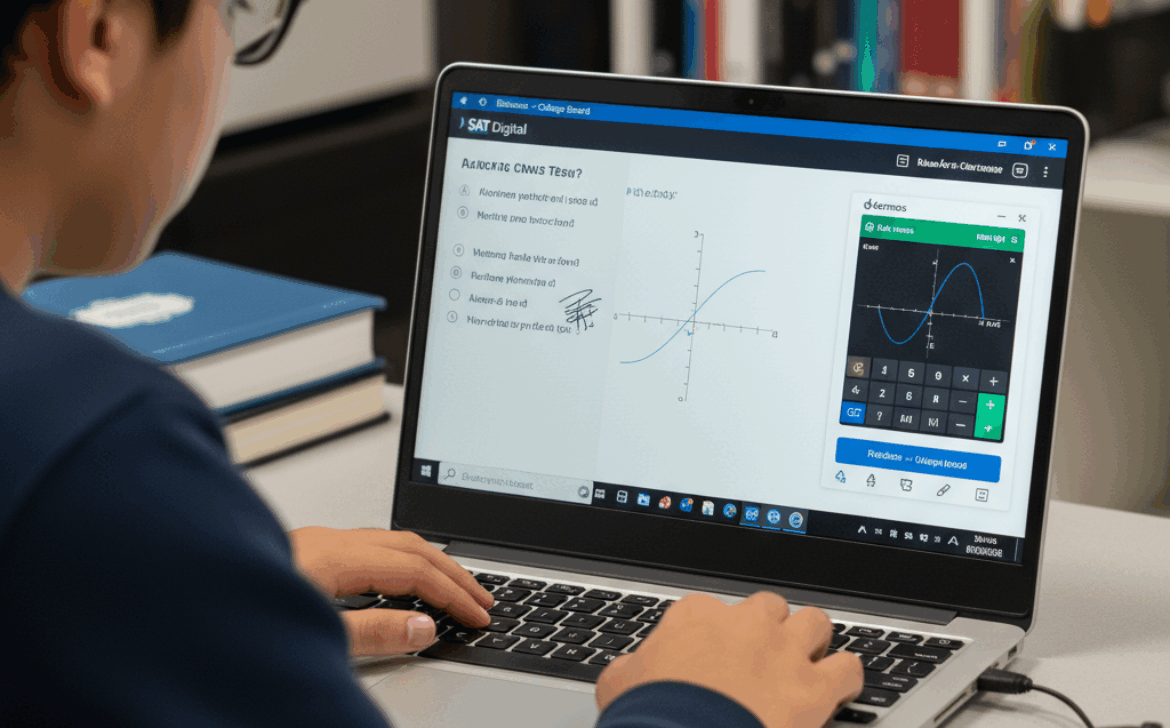
For students, this means adjusting to adaptive testing, a digital interface and integrated tools like Desmos. Many students struggle to adapt to this new format and method, so it is essential to become familiar with it early on. 

Digital SAT vs Paper SAT: Key Differences 

At first glance, you might assume the digital SAT is the same format except just on a screen. However, that’s not the case. The college Board completely redesigned the exam with a focus on digital fluency and adaptability. Here’s exactly what’s different:

Test Length and Structure 

The paper SAT lasted about three hours. The digital SAT, in contrast, runs just over two hours. As a result, you may find the digital SAT less tiring and thus more optimized for your peak focus. Also, its adaptive design adjusts the difficulty based on your performance. For example, if you do well in the first math module, the second module will have harder questions, giving students a chance to earn higher scores.

Reading and writing 

Gone are long passages with 10 – 12 questions. Instead, the digital SAT favors short passages, each with a single question. This requires students to switch mental gears quickly. During my first practice, I remember struggling to adapt when a science excerpt was followed immediately by a historical speech. Thus, quick adaptation becomes an SAT strategy in itself for this format.

Math section and calculator use 

On the paper SAT, calculators were restricted to certain sections. Now, a built-in Desmos calculator is available throughout the main portion. I remember accidentally relying too much on my physical calculator during practice, which slowed me down and caused mistakes. Training with Desmos early helps prevent those errors by familiarizing with the digital interface and its tools. For example, practicing with Desmos allows you to quickly plot graphs, manipulate functions, and perform calculations directly on-screen, reducing manual errors and improving both speed and confidence on test day.

Tools and navigation 

The physical SAT allowed students to annotate freely on sections by underlining, circling, and taking notes. This isn’t possible on the digital SAT, but it does include unique features to help students pace and track themselves:

  • On screen highlighting 
  • Flagging questions for review 
  • Timer visibility control 
  • Review screens to track progress

During one mock test, I flagged a tricky algebra question and returned later. This digital tool saved me several minutes that I would have spent flipping pages.

How to Prepare Differently for Digital SAT

Considering the differences in this new phase of the SAT, preparing for the digital version is not just about studying harder. It’s about studying smarter:  using the right tools, practicing adaptive strategies and pacing yourself. It’s especially helpful to practice these new strategies gradually over time, rather than trying to tackle everything at once as many students do with the traditional SAT. This allows you to build familiarity and confidence with each component before combining them under test conditions. Here’s a sample time line that worked for me and many other students.

Step 1:  Foundation Building (3-4 Months before test)

At this stage, focus on strengthening your basics. For the reading section, practice comprehension skills using a variety of short texts like historical speeches, scientific abstracts, and literary excerpts.

For example, I spent 30 minutes daily summarizing short articles and identifying key points, which helped build both speed and accuracy for reading. For math, I focused on reviewing algebra, geometry, and trigonometry to strengthen my foundational skills. Once I was comfortable with these concepts, I started practicing with Desmos, which helped me graph equations and work through problems efficiently, without fumbling during the test.This built both speed and accuracy. Finally, avoid jumping straight into full-length tests at this stage. Your brain needs a strong grasp of the concepts first.

Step 2: Adaptive Practice and Familiarization (2 months Before test) 

Digital SAT is adaptive, meaning the difficulty of questions increases or decreases depending on your answers. To adjust, try simulating the adaptive nature of the exam. Start with a set of mixed-difficulty questions and time yourself for each section. After completing the first set, review which questions you got right and which you missed. Then, create a second set of questions that is slightly harder for the ones you answered correctly and slightly easier for the ones you struggled with. This approach mimics the adaptive format, helping you practice pacing, identify strengths and weaknesses, and build confidence in tackling questions of varying difficulty under timed conditions.

I remember practicing a module with 15 medium questions followed by 5 hard ones. It was nerve-wracking at first, but after a week, I could handle these transitions smoothly and confidently. 

One helpful way to approach this is to track which types of questions slow you down. For me, data interpretation charts were tricky, so I practiced them repeatedly until I became more confident. At this stage, it’s a good idea to try full-length practice exams under timed conditions, or just free practice, to identify patterns in the questions that challenge you and become comfortable with the question formats. You can find official practice questions and exams from the College Board’s SAT website, and use trusted prep books (like- Bluebook) or online platforms like Khan Academy, which is free and partners with the College Board. Once you’ve tracked the questions that give you trouble, create focused practice sessions targeting those specific areas. Work on similar problems repeatedly, analyze mistakes to understand why you got them wrong, and gradually increase the difficulty as you improve. This method ensures that your practice is strategic; helping you strengthen weak spots while becoming more comfortable with the digital format.

Step 3: Full-length Mock Tests (1 month before test)

Now it’s time for realistic practice. Take full-length digital SAT tests on Bluebook. Simulate the actual test environment by ensuring you’re in a quiet room, take limited breaks, and keep track of your timing. 

I scheduled my first mock on Saturday morning, just like the real test. My first attempt was messy. I ran out of my time on the last reading passage. But simulating the SAT taught me how to pace myself, a lesson that proved invaluable on test day. 

Once you complete a practice test, don’t just focus on the questions you got wrong — review every question carefully. Even the ones you answered correctly can offer valuable lessons, as you may have struggled with certain steps or found shortcuts that make solving similar problems faster. This approach applies to all sections and ensures that you extract as much learning as possible from each practice test.

Step 4: Targeted Weak Spot Practice (2-3 weeks before test)

Analyze your mock test results. Focus on your weak areas, but don’t completely neglect your strengths. For example, my reading speed was decent, but I often misinterpreted historical context questions. So, I spent 20 minutes daily  practicing these passages, and my accuracy improved steadily. 

Step 5: Final prep and Mindset (1 week before Test)

In the final week, focus on light practice and confidence-building. Additionally, avoid cramming the night before so that you have a fresh mind for test day. Here’s a possible preparation routine you can use to effectively prepare:

  • Morning routine: Quick review of formulas, key vocabulary, or difficult question types.
  • Evening Routine:  Relaxation techniques like meditation, light exercise or listening to music.
  • Test Strategy: Spend a few minutes each day outlining how you’ll approach the exam itself. Like, when to flag questions, how to efficiently use Desmos, and how to maintain steady pacing.

I followed this schedule, and by the end of the week, I felt calm, prepared, and confident, which made a huge difference in my performance from my first practice session.

Common Mistakes & How to Avoid Them 

Even with a solid prep plan, students often stumble on avoidable mistakes. Knowing these ahead of time can save frustration and time, and lead to a better SAT experience.

Underpreparing for the digital interface 

Many students assume that Digital SAT is just like a paper test on a screen. In my first practice session, I spent several minutes searching for the flag question button and highlighting tools and ultimately lost valuable time.

Spend the first week of prep just exploring Bluebook. Learn how to flag questions, highlight texts, use the calculator, and navigate between sections. Familiarity with the interface can mitigate anxiety and wasted time during the real test.

Poor time Management 

Even with a shorter, two-hour test, students can still run out of time. For example, during my first mock, I mismanaged the math section. Specifically, I spent far too long on one difficult algebra question, which left me rushing through the easier ones later. That experience taught me the importance of time management.
The best way to improve is through timed practice and by simulating full test conditions. Learn how to pace yourself, and remember it’s okay to flag questions and return to them later. Adaptive testing requires efficiency as much as accuracy.

Over reliance on calculator 

While desmos is available throughout the math section, over reliance can slow you down. Early in my prep,  I would graph simple linear equations using the calculator when the mental calculation would have been faster and more time efficient.

It’s helpful to practice mental math for the simpler calculations and only use Desmos when necessary. Familiarity with both skills will save precious minutes. In fact, knowing when to switch between mental math and Desmos can make your problem-solving faster and free up time to review tricky questions.

Skipping mixed subject practice

The digital SAT shifts quickly between topics- reading, writing, and math. Students who practice in single-subject books may be caught off-guard. To prepare, mix subjects during practice sessions so you can get used to switching gears quickly, just as you’ll need to on test day. For example, try alternating a 20-minute math set with a 20-minute reading set in the same study block to mimic the exam’s rhythm.

Neglecting review and reflection 

Practice tests are only useful if you review mistakes carefully. I used to glance at wrong answers and move on. On the next mock, I repeated the same mistakes. Note question type,  topic, and reason for the questions you miss. Track patterns and focus on persistent weak areas. This makes practice more targeted and efficient.

Skipping stress management 

Digital SAT may feel faster and more interactive, which can be anxiety-inducing. Despite this, students often underestimate mental fatigue or stress. 

Be sure to include short breaks, mindfulness exercises, and even light physical activity in your prep schedule. I found a 10-minute walk after every mock test helped me recharge and stay focused for the session. 

Overlooking official practice resources 

Some students rely solely on third-party apps or guides. While these can help they may not perfectly reflect the digital SAT format. 

Prioritize official college board practice materials, especially Blue book practice tests. Then, combine them with secondary resources like Khan Academy or Magoosh to reinforce learning. 

Lack of parent / peer support

Studying alone can be tough on motivation. I noticed friends who prepared entirely on their own often struggled to stay on track. Even small check-ins with a parent, friend, or mentor can make a huge difference in keeping your momentum going.

The digital SAT is a new challenge, but not an unbeatable one. By practicing on Bluebook, pacing yourself, reviewing mistakes, and managing stress, students can turn potential pitfalls into learning opportunities. Remember, even small habits like logging errors or switching subjects in practice sessions pay off big on test day.

As Prep Excellence always says- 

      “Tests don’t just measure knowledge, they measure preparation and strategy. A smart plan beats last-minute effort every time.”

With careful planning, realistic prep schedules, and awareness of common mistakes, you can approach the Digital SAT with confidence and focus, just as you would with any exam.

Parent perspective:  How to support without pressure 

Parents play a vital role in supporting their child’s SAT preparation, and your guidance can make a real difference in their confidence and performance. Encourage your child to practice regularly, offer help with technology when needed, and celebrate their progress along the way. Avoid micromanaging — being a supportive and encouraging presence is far more effective than trying to control every step of their preparation.

With consistent encouragement and thoughtful support, you can help your child stay motivated and confident, giving them the best chance to succeed on test day.

Digital SAT vs Paper SAT – Which is better ? 

The truth is, neither format is better one way or another. Both have advantages and disadvantages depending on the approach you’ve prepared for. The paper SAT tested endurance and allowed for physical note-taking, while the Digital SAT prioritizes efficiency and adaptability. It’s important to recognize these differences and prepare accordingly.

For students taking SAT in 2026 and beyond, the Digital version is the reality. The sooner you adapt your study habits to match the new format, the more confident you will feel on test day. And remember, colleges don’t favor one version over the other. A strong score is a strong score, whether earned on paper or on a Bluebook. So, if you are gearing up for the Digital SAT, don’t dwell on what’s been lost. Instead focus on what you can use to your advantage- shorter test times, built in tools, and the chance to work at your pace and level.

The Digital SAT is a shift, but with the structured prep, realistic timelines, and awareness of common pitfalls, students can approach it confidently. Whether you are a student or a parent, understanding the format, practicing adaptively and maintaining a calm, organized schedule will set the stage for success.

Remember, whether digital or physical, mindset and strategy always matter most.

Take the next step toward SAT Success.
No matter the format, Digital or Paper, success comes from smart preparation and the right strategies. Explore the resources, practice adaptively, and take the next step with confidence.
Begin your SAT prep journey with Prep Excellence.


Reviewed by Shabeeba Sheikh

PSAT 2025 Guide for Juniors: Why It Matters, Key Dates & How to Prepare

Key takeaways: 

  • What Is the PSAT/NMSQT and Who Should Take It in 2025?
  • Why the PSAT Matters: Scholarships, College Readiness, and Beyond
  • Inside the PSAT: Format, Timing, and Key Test Sections
  • Smart PSAT Prep Tips and Strategies for Test Day Success
  • Common Misconceptions About the PSAT
  • FAQs: What Parents Should Know About the PSAT?
  • After the PSAT: Interpreting Scores and Planning Next Steps

Ever wondered why the PSAT 2025 is such a big deal for juniors? Many see it as just another test, but it plays a key role in preparing for college admissions and can even unlock scholarship opportunities.

In this guide, we’ll break down what the PSAT is, why it matters, and how you can prepare effectively. You’ll also learn about its connection to the National Merit Scholarship, see what’s on the test, and explore practical PSAT prep tips to help you perform your best.


What Is the PSAT/NMSQT and Who Should Take It in 2025?

The PSAT/NMSQT stands for the Preliminary SAT/National Merit Scholarship Qualifying Test. As the name suggests, it has two main purposes: giving students a preview of the SAT and serving as the qualifying exam for the National Merit Scholarship Program. While often called a “practice SAT,” it is more than just a trial run. The questions, timing, and scoring closely mirror the SAT, making it a reliable indicator of how students might perform later when college admissions are on the line.

Most juniors across the United States take the PSAT each October, though some schools also allow sophomores to sit for it as additional practice. For juniors in 2025, the PSAT matters most because it doubles as the entry point for the National Merit Scholarship Program. Each year, over 1.3 million students enter the program, but only about 6,900 ultimately earn the National Merit scholarships. But even if you don’t win one of those awards, strong scores can still earn you recognition that strengthens a college application and highlights academic achievement.

It’s also worth noting that the PSAT has no direct impact on college admissions, because colleges never see your score. The College Board does not share PSAT results with admissions offices since the exam is designed purely as a practice tool and a qualifier for the National Merit Scholarship Program.Instead, it serves as a stepping stone: a chance to build test-taking stamina, sharpen skills, and set clear goals for the SAT or ACT. For students aiming at competitive colleges, or those looking to strengthen their applications with scholarship opportunities, taking the PSAT in 2025 is a valuable and strategic step.


Why the PSAT Matters: Scholarships, College Readiness, and Beyond 

The PSAT might look like just another standardized test, but for juniors it comes with important benefits that can shape their college journey. One of the biggest reasons it matters is its connection to the National Merit Scholarship Program. High scorers can earn national recognition and, for the top tier, scholarships that reduce the cost of college. Even students who don’t receive money can gain valuable distinctions such as “Commended Scholar” or “Semifinalist,” which boost the credibility of college applications.

Beyond scholarships, the PSAT is a powerful tool for college preparation. Because its format mirrors the SAT, it gives students a realistic sense of pacing, question style, and test-day conditions, without the pressure of college admissions. This makes it an excellent chance to sharpen test-taking strategies, discover areas to improve, and walk into the SAT more confident and less anxious. Many students report that taking the PSAT made the SAT feel more familiar, reducing anxiety on test day.

Beyond practice and scholarships, the PSAT opens doors to additional opportunities. Some organizations and universities use scores to identify talented students for specialized programs or merit awards. Others consider PSAT performance when extending invitations to honors events or summer enrichment programs. In this way, the exam acts as a gateway—not just to financial aid but also to experiences that can shape a student’s academic journey.


Inside the PSAT: Format, Timing, and Key Test Sections

Understanding the structure of the PSAT is one of the smartest steps you can take to feel confident on test day. The exam is divided into two main areas: Reading and Writing, and Math. Unlike older versions, the 2025 PSAT is fully digital, delivered on College Board’s Bluebook app. That means students test on a laptop or school-issued device, with built-in tools such as an on-screen calculator, highlighter, and annotation features. While the shift to digital may seem intimidating at first, many find it more flexible because questions adapt in difficulty as you move through the sections.

Here’s a breakdown of the structure:

SectionModuleTimingNumber of QuestionsScore Range
Reading & WritingModule 132 minutes27 questions160-760
Reading & WritingModule 232 minutes27 questions
MathModule 135 minutes22 questions160-760
MathModule 235 minutes22 questions
Total4 Modules2 hours 14 minutes98 questions320-1520

The Reading and Writing section blends comprehension, grammar, and vocabulary into shorter passages than what appeared on past paper tests. You’ll answer multiple-choice questions that measure how well you understand meaning, structure, and evidence-based reasoning.

The Math section focuses heavily on algebra, problem solving, data analysis, and geometry, but calculator use is allowed for all questions. Questions range from straightforward computation to multi-step, real-world problems, making it essential to balance speed with accuracy.

Altogether, the PSAT lasts a little over two hours and fourteen minutes. While shorter than the SAT, it mirrors the same pacing and structure, so students can treat it as a realistic rehearsal.


How to Prepare for PSAT 2025: A 2–4 Week Junior Year Study Plan That Works

Not every junior has months to dedicate to PSAT prep, and that’s okay. With the right plan, even a focused 2–4-week effort can make a real difference. The key is to use your limited time wisely: practice with real questions, focus on your weaker areas, and get comfortable with the digital test format. Here’s a simple plan that works.

Week 1: Get Familiar with the Test

Start by understanding what you’re up against. Take a full-length practice test using the Bluebook app from College Board, which is the same platform you’ll use on test day. Don’t worry about your score too much. This first test is all about seeing how the timing feels and where you struggle. For example, you might realize that reading passages takes longer than expected, or that certain math topics (like algebra or geometry) slow you down. Write these notes down; they’ll guide the rest of your prep.

Week 2: Focus on Weak Spots

Now that you know your trouble areas, spend the week tackling them directly. If vocabulary-in-context questions tripped you up, review strategies for understanding word meaning from context. If math word problems felt confusing, practice breaking them into smaller steps. Use free resources like the official College Board practice sets. Even 30 minutes a day can build confidence quickly.

Week 3: Build Speed and Strategy

This is the time to work on pacing. Practice short timed sets instead of only doing full tests. For example, give yourself 25 minutes to complete 15 math questions, or 20 minutes to do a group of reading questions. The goal is to train your brain to stay focused and manage time under pressure. Pay attention to careless mistakes, and practice skipping questions that take too long.

Week 4: Final Review and Test-Day Readiness

In the last week, take one more full-length practice test. Compare your results with Week 1—most students are surprised by how much they’ve improved. Review your mistakes carefully, but don’t cram the night before the exam. Instead, make sure you know the basics: charge your laptop or tablet, pack your ID, and get a good night’s sleep.


Smart PSAT Prep Tips and Strategies for Test Day Success

Even after weeks of studying, what you do on test day can make a big difference. The PSAT isn’t just about what you know—it’s also about how you manage your time, stress, and focus. With the right strategies, you can walk in feeling confident and perform at your best. Here are some simple but powerful test-day tips.

Know the Tools Beforehand

Since the PSAT is now digital, practice a bit with your device and the test app so you know how things work—like flagging a question, zooming in on text, or using the on-screen calculator. This way, nothing will feel unfamiliar during the test, and you won’t waste time figuring out buttons while the clock is ticking.

Manage Your Time Wisely

The PSAT test is adaptive, which means your performance on the first set of questions affects the next. Don’t rush through the first module—accuracy matters more than speed at that point. If you’re stuck, skip and come back later. For example, spending three minutes on one tricky math problem could cost you time on easier questions that you would’ve answered correctly.

Make the Morning Easy

Don’t wait until the last minute to get ready. Pack your ID, charge your device, and choose your clothes the night before. On the morning of the test, eat a light but filling breakfast, like toast with eggs or fruit with yogurt. Little things like this help you avoid stress and keep your mind clear.

Don’t Leave Questions Blank

Since there’s no penalty for guessing, always select an answer—even if you’re unsure. Eliminate obviously wrong choices first, then make your best guess. Many students pick up extra points this way without realizing it.

Think Big Picture

Remember: the PSAT is a chance to learn and grow, not a final judgment of your abilities. Treat it like a practice run for future tests, and don’t let one tough question shake your confidence. Staying calm and steady is one of the best test-day strategies you can master.


Common Misconceptions About the PSAT

Even though the PSAT is a familiar exam for many schools, myths and misunderstandings still surround it. Clearing these up helps students approach the test with a stronger sense of readiness.

One misconception is that the PSAT directly affects college admissions. It doesn’t—colleges never see PSAT scores. The test is primarily for practice and scholarship opportunities. Another common myth is that only “top students” should take it. In reality, every junior benefits from the experience, since it provides valuable practice under real testing conditions. Some also believe that the PSAT is identical to the SAT. While similar in structure and content, the PSAT is shorter and does not include the toughest SAT questions. This makes it a more approachable starting point.

Finally, many students think that if they don’t earn a National Merit award, the PSAT “doesn’t count.” That’s far from true. The practice, feedback, and confidence students gain often have a bigger long-term impact than scholarships alone. By understanding what the PSAT is, and isn’t, students can see it as a helpful stepping stone rather than a high-pressure hurdle.


FAQs: What Parents Should Know About the PSAT?

Parents often have as many questions about the PSAT as their teens do, especially since this test can feel like the first big step toward college admissions. Below are some of the most common concerns, answered in clear terms to help families feel prepared and confident.

Do colleges see PSAT scores?

No. Colleges do not receive PSAT results. The score report is for the student, family, and school only. Think of it as a practice run that helps highlight strengths and areas for improvement before the SAT.

Why is the PSAT important if it doesn’t go to colleges?

The biggest reason is its role in the National Merit Scholarship Program. High-scoring juniors can qualify for recognition or scholarships, which can reduce the cost of college and look impressive on applications. Beyond that, the test is valuable practice for the SAT—it gives students a sense of timing, question styles, and stamina needed for a longer exam.

Can sophomores or freshmen take it too?

Yes, many schools let younger students take the PSAT as practice. However, only junior-year scores count toward National Merit recognition. If your child takes it earlier, it’s just for experience.

How should parents support their teen during PSAT prep?

Encouragement works better than pressure. Ask gentle questions like, “Do you want me to quiz you on vocab?” or “Would it help if I timed a practice section for you?” Small acts like providing a quiet study space, helping manage deadlines, or celebrating progress can ease stress.

What should my child bring on test day?

Since the PSAT is digital, the main requirement is a fully charged, school-approved device with the Bluebook app installed. Students should also bring their school ID, pencils (for scratch work), and a snack for the break. Checking with the school in advance ensures no surprises.

What happens after the PSAT?

Students receive score reports in December, which break down performance by section. Parents can sit with their teen to review these reports together, identifying strengths and areas for growth. Many families use these results to make a plan for spring SAT prep or to explore other testing options like the ACT.

After the PSAT: Interpreting Scores and Planning Next Steps

When PSAT score reports are released in December, many students focus only on the total number. But the real value lies in the details. Each report breaks down performance into sections and sub scores, offering a clear picture of where you’re strongest and where there’s room to grow. For example, you might discover that while your grammar skills are solid, your reading comprehension needs more practice, or that algebra feels comfortable but word problems take extra time. Treat these details as feedback, not judgment—they highlight exactly where your energy should go next.

The most effective way to use this feedback is to connect it to specific actions. Instead of feeling discouraged by a weaker area, view it as a chance to build momentum. If your reading score dipped, add daily practice with nonfiction passages to your routine. If math problem-solving slowed you down, schedule weekly timed drills to sharpen speed and accuracy. Making small, consistent adjustments based on your score report turns the PSAT into a springboard for stronger performance on the SAT.

Finally, build a timeline. Plan short-term goals for the next few weeks and bigger targets leading up to the SAT. If you’re unsure how to structure this, consider getting help from a tutor to turn your PSAT results into a step-by-step action plan. That way, instead of feeling stuck on numbers, you’ll know exactly what to practice, when to do it, and how it connects to your college goals.

Wrapping Up

Every big milestone starts with a small step, and the PSAT is one of those steps. It’s not just about testing—it’s about learning how to handle pressure, manage time, and grow from the experience. The lessons you take away from this test go far beyond one score; they prepare you for what comes next.

For juniors, that “next step” is the SAT. Using your PSAT experience to guide your SAT prep can turn uncertainty into a clear plan of action. If you want structured support and expert strategies to reach your best possible score, Prep Excellence has SAT specialists who can help you build confidence and move toward your college goals with focus and direction.

Summary

The PSAT exam serves as both a practice SAT and a qualifier for major merit-based scholarships, making it one of the most important tests for high school juniors. It includes sections on Reading and Writing, and Math, each designed to measure skills colleges value most. Strong performance on this test can open doors to scholarships and give students an early edge in SAT preparation. With the right preparation strategies, juniors can reduce test-day surprises and make the most of this opportunity.


Reviewed by Zaineb Bintay Ali